Inflatable Implant

3-Piece Inflatable Penile Implant

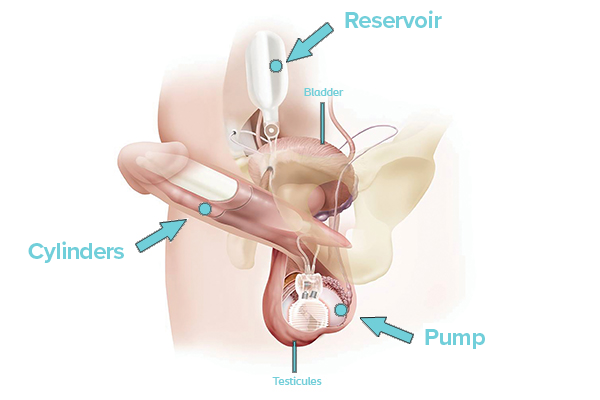
The 3-piece inflatable penile implant is the gold standard treatment for erectile dysfunction, delivering the most natural look and feel available. This system — consisting of a pump, reservoir, and cylinders — gives you complete, on-demand control over erections.

98%
Patient Satisfaction
3,000+
Successful Surgeries
20+
Year Warranty
Natural Appearance
Full Control
Fully Concealable
3-Piece Inflatable Penile Implant - Inflatable Penile Implant System
Gold Standard
3 Parçalı Penil Protez

Direct Answer

A 3-piece penile implant is an inflatable implant system consisting of cylinders, a pump, and a reservoir. It is used for erectile dysfunction that has not responded to oral medications, injection therapy, or vacuum erection devices. The European Association of Urology (EAU) recommends this approach as the definitive surgical treatment for organic ED.

Ücretsiz Konsültasyon

Prof. Dr. Özkan Onuk ile görüşün

Gizlilik Garantisi
Ücretsiz Danışmanlık
Detail Information
Procedure 3-Piece Inflatable Penile Implant
Surgeon Prof. Dr. Özkan Onuk — Urologist
Clinic Urologica, Istanbul, Turkey
Surgery Duration 60–90 minutes
Hospital Stay 1–2 nights
Device Options Rigicon, Coloplast, AMS
Accreditation Turkish Urology Association standards
Pricing Confirmed during your consultation
Contact WhatsApp: +90 541 123 06 03

What Is a 3-Piece Inflatable Penile Implant?

A 3-piece inflatable penile implant is the most advanced implant system available for erectile dysfunction — surgically placed inside the corpora cavernosa and operated on demand through a hydraulic mechanism.

This inflatable system consists of three components: two cylinders implanted inside the shaft of the penis, a pump unit placed inside the scrotum, and a fluid reservoir positioned in the lower abdomen (prevesical space). By mimicking the body’s natural erectile tissue, the system produces results closest to a physiological erection.

Also known as a penile implant or penile prosthesis, the system works by squeezing the pump to transfer sterile fluid from the reservoir into the cylinders. This hydraulic transfer causes the penis to become rigid and ready for sexual intercourse. Afterwards, pressing the release valve on the pump returns the fluid to the reservoir, allowing the penis to return to a flaccid state.

According to European Association of Urology (EAU) guidelines, 3-piece inflatable implants are indicated for organic erectile dysfunction that has not responded to conservative treatments such as oral medication, intracavernosal injections, or vacuum erection devices. Per International Society for Sexual Medicine (ISSM) recommendations, this system is appropriate for patients seeking a long-term solution who have consented to surgical treatment.

The surgical implantation procedure is performed under anesthesia through a penile or scrotal incision. In experienced hands, surgery takes between 60 and 90 minutes. Modern implant systems incorporate antibiotic coating technology to minimize the risk of infection.

Who Is a Candidate for an Inflatable Penile Implant?

A 3-piece inflatable penile implant is indicated for the following conditions:

  • Organic erectile dysfunction — Erection problems of vascular, neurological, or hormonal origin where conservative treatments have proven insufficient
  • Non-response to oral medication — Patients for whom phosphodiesterase inhibitors (PDE5 inhibitors) have been ineffective or cannot be used due to side effects
  • Failed intracavernosal injections — Cases where penile injection therapy has produced inadequate results or the patient has declined to continue this method
  • Peyronie’s disease — Erectile dysfunction accompanied by penile curvature that requires corrective surgery
  • Post-radical prostatectomy — Permanent erectile dysfunction following prostate cancer surgery
  • Pelvic trauma or surgery — Nerve damage-related ED resulting from pelvic injuries or surgical procedures
  • Diabetic erectile dysfunction — Treatment-resistant ED caused by long-term diabetes-related vascular and nerve damage

According to EAU guidelines, the decision to proceed with surgical treatment must be made using a multidisciplinary approach, taking into account the patient’s medical condition, expectations, and quality-of-life goals. Turkish Urology Association standards require comprehensive pre-operative assessment and thorough patient counselling before surgery.

During the andrology specialist evaluation, the patient’s overall health, any co-existing conditions, previously attempted treatments, and the expectations of both the patient and their partner are assessed in detail.

Who Is Not a Candidate for an Inflatable Penile Implant?

A 3-piece inflatable penile implant is contraindicated in the following situations:

  • Active urinary tract infection — Surgery is postponed in the presence of an untreated infection in the urinary tract or genital area
  • Uncontrolled diabetes — Proceeding with surgery before blood sugar is properly regulated significantly increases the risk of infection
  • Coagulopathy — Patients with bleeding disorders or those on anticoagulant therapy require additional precautions
  • Psychological factors — Unrealistic expectations or untreated psychiatric conditions represent a relative contraindication
  • Local tissue issues — Active infection, open wounds, or severe fibrosis of the penile skin from previous surgery
  • Systemic infection — Patients with an active source of infection anywhere in the body
  • Anaesthesia contraindications — Patients who are not suitable candidates for general or spinal anaesthesia

Relative contraindications include immunosuppressive therapy, chronic renal failure, and advanced age. In these cases, an individualised risk-benefit assessment is carried out. Pre-operative laboratory tests and any necessary specialist consultations are used to optimise the patient’s condition before surgery.

According to ISSM recommendations, most contraindications are relative and can be managed with appropriate preparation and precautions. Open communication between the surgeon and patient, clear management of expectations, and a thorough discussion of potential complications are critical to treatment success.

Penile Implant Types Compared

Penile implants are manufactured in two main types: 3-piece (inflatable) and 1-piece (malleable) systems.

Feature 3-Piece (Inflatable) 1-Piece (Malleable)
Components Cylinders + Pump + Reservoir Cylinders only
Flaccid Appearance Completely natural Semi-rigid
Erection Quality Closest to natural Constant firmness
Operation Squeeze the pump Manual positioning
Surgery Duration 60–90 minutes 45–60 minutes
Mechanical Complexity More complex Simpler
Manual Dexterity Required Pump operation Minimal

The inflatable implant system provides the most natural transition between the flaccid and erect states. When the pump is not activated, the penis appears completely soft — making it undetectable under clothing or in changing rooms. Erection quality closely resembles a natural erection, delivering satisfying results in terms of both rigidity and girth expansion.

Advantages of the 1-Piece (Malleable) System

Malleable implants carry a lower risk of mechanical failure due to their simpler design. They may be preferred for patients with limited hand dexterity — for example, those with restricted finger function caused by rheumatic conditions. They are also a suitable alternative for patients with a history of pelvic surgery where placement of an abdominal reservoir would be inadvisable.

The choice of implant type is individualised based on the patient’s anatomy, manual dexterity, expectations, and the surgeon’s recommendation.

Malleable implant — detailed information

What to Expect from an Inflatable Penile Implant

A 3-piece inflatable penile implant provides sufficient rigidity for sexual intercourse, but it does not replace the natural erection mechanism.

Realistic expectations are the single most important factor in patient satisfaction. The inflatable implant system delivers the rigidity needed for penetration and produces excellent results in this regard. However, it is important to understand certain physiological realities.

The implant does not increase penile length. In fact, a minimal degree of shortening may occur as a result of the surgical process. Similarly, penile girth may not reach the level of a natural erection. The glans (head of the penis) is independent of the implant and will not become as firm as it would during a natural erection.

Libido (sexual desire) is not affected by the implant — this is a hormonal function. Orgasm and ejaculation are also independent of the implant surgery and depend on nerve function. If no pre-existing nerve damage is present, these functions are preserved.

According to studies published in the Journal of Sexual Medicine, patient satisfaction rates following 3-piece implant surgery are reported at high levels. Partner satisfaction is comparable, with couples reporting meaningful improvements in overall sexual quality of life.

Expectation management is an integral part of the pre-operative consultation process. Prof. Dr. Özkan Onuk explains the full scope of the procedure, possible outcomes, and limitations to each patient in detail.

Sexual Life and Sensation

Penile sensation, orgasm capacity, and ejaculatory function are all preserved following penile implant surgery.

Penile sensation is transmitted through dermal nerves, which are protected during surgery. The corpora cavernosa — where the implant cylinders are placed — are not directly involved in sensation. As a result, touch, temperature, and other sensory functions remain unchanged after the procedure.

Orgasm is a physiological response that occurs at the level of the brain and spinal cord. A penile implant does not affect this central nervous system function. The vast majority of patients who were able to achieve orgasm before surgery continue to do so afterwards.

Ejaculation occurs through contractions of the prostate and seminal vesicles and is independent of the penile implant. In patients without prior prostate surgery or pelvic nerve damage, ejaculatory function is preserved. Semen volume and quality are also unaffected.

According to ISSM data, sexual satisfaction following implant surgery is reported at high rates. Couples report a return to spontaneous sexual activity and an improvement in relationship quality. Partners also generally report not being aware of the implant’s presence during sexual activity.

Device Lifespan and Durability

Modern 3-piece penile implants demonstrate high mechanical reliability rates over the long term.

Today’s implant technology has made significant advances in durability. Improvements in silicone and polymer materials have substantially reduced mechanical failure rates. Devices from leading manufacturers such as Rigicon, Coloplast, and AMS have demonstrated their reliability in long-term clinical studies.

Implant lifespan can vary depending on the patient’s frequency of use and individual factors. Data reported in peer-reviewed literature shows that modern devices are capable of functioning without issues for many years. The need for revision surgery has declined over time, a trend supported by continued technological advances.

In the event of mechanical failure, revision surgery is an option. Revision procedures performed at experienced centres produce successful outcomes. Infection, erosion, or mechanical malfunction are among the indications for revision. While revision surgery can be more challenging than the original procedure, success rates are satisfactory in experienced hands.

Regular follow-up is an important factor influencing implant longevity. Annual check-ups allow for early detection and timely management of any potential issues.

Risks and Complications

Like any surgical procedure, 3-piece penile implant surgery carries certain risks.

Infection

Implant infection is the most serious complication and typically requires removal of the device. Modern antibiotic-coated implants and improved surgical techniques have significantly reduced infection rates. EAU guidelines require perioperative antibiotic prophylaxis and strict aseptic technique. Diabetic patients carry a higher infection risk, making optimisation of blood sugar control critically important.

Mechanical Failure

Leakage or malfunction can develop in the pump, cylinders, or connecting tubing. Mechanical reliability rates in modern devices are high. In the event of failure, device replacement through revision surgery is possible.

Other Complications

  • Haematoma — A collection of blood at the surgical site; typically resolves with conservative management
  • Erosion — The implant wearing through the skin or urethra; rare
  • Pain — Temporary post-operative pain is an expected and normal part of recovery
  • Cylinder perforation — A rare complication that can occur during surgery
  • Auto-inflation — Spontaneous inflation of the device; rare in modern implants

Complication rates are directly related to surgeon experience. Procedures performed at high-volume centres are associated with lower complication rates. It is mandatory to fully inform the patient of all risks prior to surgery and to obtain written informed consent.

Post-Operative Recovery Process

Recovery following 3-piece penile implant surgery takes place in 4 stages:

  1. Hospital stay (1–2 days) — Pain management, urinary catheter monitoring, and early mobilisation. Bed rest is recommended on the first day, with short walks encouraged by the second day.
  2. Early recovery (1–2 weeks) — Wound care, swelling and bruising management. Light activity around the home is possible, but heavy lifting and strenuous physical activity must be avoided.
  3. Intermediate period (2–6 weeks) — Gradual return to daily activities. Patients with desk jobs can typically return to work within 1–2 weeks. Those in physically demanding roles may require a longer recovery period.
  4. Activation and sexual activity (from 4–6 weeks) — Following a surgeon review, patients are taught how to activate the implant and are cleared for sexual activity. Pump operation training is provided during this stage.

Regular follow-up appointments are scheduled throughout the recovery period. The first check-up typically takes place one week after surgery, with implant activation at 4–6 weeks. The follow-up protocol can be adjusted based on each patient’s individual rate of recovery.

Pain management is an important part of the recovery process. Prescription analgesics are used during the first week, after which patients transition to over-the-counter pain relief as needed. Most patients report a significant reduction in pain within 2 weeks.

About Prof. Dr. Özkan Onuk

Prof. Dr. Özkan Onuk is a physician with an active academic career in urology and andrology.

Prof. Dr. Özkan Onuk serves as a faculty member in the Department of Urology at Biruni University Faculty of Medicine. Throughout his academic career, he has conducted research in the areas of male sexual health, erectile dysfunction treatment, and penile implant surgery.

Academic Position: Faculty Member, Department of Urology, Biruni University Faculty of Medicine

Areas of Expertise: Penile implant surgery, erectile dysfunction treatment, Peyronie’s disease, male infertility, andrology

Memberships:

  • European Association of Urology (EAU)
  • Turkish Urology Association
  • International Society for Sexual Medicine (ISSM)

Clinical Practice: Prof. Dr. Onuk provides consultation and treatment in penile implant surgery and male sexual health at Urologica Clinic in Istanbul.

Prof. Dr. Özkan Onuk carries out an individualised assessment for each patient to determine the appropriate treatment plan. A comprehensive pre-operative briefing and a structured post-operative follow-up protocol are applied for every case.

Book a Consultation

To find out more about the 3-piece inflatable penile implant and arrange an individualised assessment with Prof. Dr. Özkan Onuk, you can book a consultation appointment.

During the consultation, your medical history is reviewed, a physical examination is carried out, and treatment options are discussed. You will receive detailed information about implant candidacy, the most suitable implant type for your case, and the surgical process. Your individual questions are answered and your expectations are assessed.

Contact:

📱 WhatsApp: +90 541 123 06 03   📧 Email: Urologica.tr@gmail.com   📍 Location: Urologica Clinic, Istanbul, Turkey

Medical Disclaimer

The information on this page is intended for informational purposes only and does not substitute professional medical advice under any circumstances. For any questions regarding a medical condition, always consult a qualified physician. Individual results may vary. Prof. Dr. Özkan Onuk and Urologica cannot be held responsible for decisions made based on the information provided here. This content has been prepared in accordance with Turkish Ministry of Health regulations.

Medically reviewed by: Prof. Dr. Özkan Onuk, Faculty Member, Department of Urology Last updated: February 2026 | Next review: May 2026
Why Urologica?

Why Choose Us for Your 3-Piece Penile Implant?

Turkey's leading specialists, internationally accredited treatment, and lifetime support.

Prof. Dr. Özkan Onuk

Prof. Dr. Özkan Onuk

Urologist | Clinical Director

Rigicon Global Reference Center

3-Piece Implant Specialist

A surgeon specialising in inflatable penile implant surgery, with thousands of successful procedures performed.

The Most Natural Result

The 3-piece system delivers a completely natural appearance and sensation. Completely undetectable when not erect.

Complete Confidentiality

Patient privacy is our highest priority. Every aspect of your care is handled with absolute discretion.

20+ Year Warranty

The implants we use are built to last, backed by long-term design engineering and manufacturer warranty.

20+
Years of Experience
3,000+
Successful Surgeries
98%
Patient Satisfaction
5,000+
Happy Patients
Frequently Asked Questions

FAQs About the Inflatable Penile Implant

Answers to the questions our patients ask most.

A penile implant — also known as a penile prosthesis or inflatable penile implant — is a surgical device used in the treatment of erectile dysfunction. It is placed inside the penis to enable erections on demand. The 3-piece inflatable system is the most advanced type of penile implant available.
The procedure is performed under general or spinal anaesthesia, so no pain is felt during surgery. Some post-operative discomfort is expected and is managed with prescription analgesics. Most patients report a significant reduction in pain within 1–2 weeks.
3-piece penile implant surgery takes an average of 60–90 minutes. Duration may vary depending on the patient's anatomy and any additional procedures performed. In experienced hands, surgery is typically completed towards the shorter end of this range.
Sexual activity can generally resume 4–6 weeks after surgery, following clearance from your surgeon. This timeframe allows the tissues to heal sufficiently and the implant to stabilise. Resuming sexual activity too early may increase the risk of complications.
When not activated, the 3-piece inflatable implant provides a completely flaccid, natural appearance. It is not expected to be noticeable under clothing or in changing rooms. This is one of the key advantages of the inflatable system over a malleable (semi-rigid) implant.
Yes — implant surgery does not affect orgasm capacity. Orgasm is a response that occurs at the level of the brain and spinal cord, and is independent of the penile implant. The vast majority of patients who could achieve orgasm before surgery continue to do so afterwards.
The hospital stay following 3-piece penile implant surgery is typically 1–2 nights. This may vary depending on the patient's overall health and rate of recovery. In some cases, same-day discharge may be possible.
The main contraindications are active urinary tract infection, uncontrolled diabetes, significant bleeding disorders, and unrealistic expectations. Most contraindications are relative and can be managed with appropriate preparation. A detailed assessment is carried out during your consultation.
Yes — implants from established manufacturers with strong clinical evidence should always be used. Devices from leading brands such as Rigicon, Coloplast, and AMS offer proven long-term reliability. Brand selection is made based on the surgeon's recommendation and patient preference.
Modern 3-piece implants have high long-term mechanical reliability rates. Lifespan can vary depending on individual factors. In the event of mechanical failure, device replacement through revision surgery is possible.

Have more questions? Ask anything during a free consultation.

Ask Us on WhatsApp
Start Your Journey

Book Your Free Consultation Today

Speak confidentially with Prof. Dr. Özkan Onuk, get your questions answered, and together we'll build the treatment plan that's right for you.

JCI Accredited
Hospitals
Rigicon Certified
Surgeon
Lifetime
Follow-Up
Complete
Confidentiality